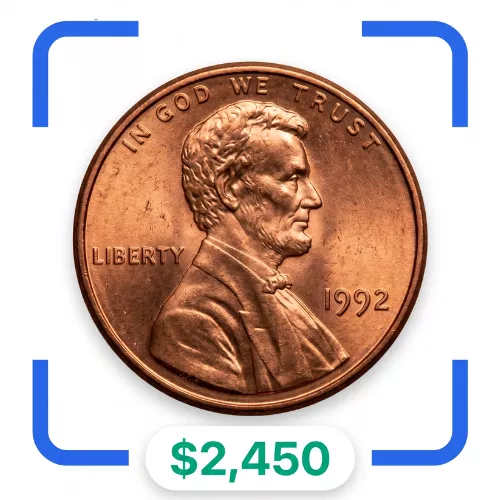
Lincoln Memorial Cent · Highest Mintage Year · 95% Copper
Over 6.5 billion struck — yet rare SMS varieties, overstrikes, and wrong planchet errors make this a surprisingly rewarding year to hunt.
6.5B+
Total Minted
$4,312
Overstrike Record
SMS
Mystery Variety
5
Error Types
The 1964 penny sits at a unique crossroads in Lincoln cent history: it was the last year the cent was struck in 95% copper before the Mint began transitioning away from the traditional alloy in response to the great coin shortage of the early 1960s. With over 6.5 billion pieces struck across Philadelphia and Denver, it is also one of the highest-mintage years in U.S. coinage history. For a full overview of current market prices by grade and variety, the 1964 Penny Value guide at CoinValueApp covers certified population data and the latest auction benchmarks for both mint marks.
For most collectors, a 1964 penny pulled from circulation is worth only face value — its sheer abundance keeps base prices low. But the combination of record production volumes, a transitional coinage era, and the elusive SMS strikes makes the 1964 series genuinely exciting for error and variety specialists willing to look carefully.
Three questions to answer before diving deeper
🔴
Check the Surface Finish
Does your coin have a distinctive satin-like surface unlike a normal business strike or a mirror proof? You may have an SMS variety worth $5,000–$25,000+.
🟡
Check the Reverse Under 10x
Look for clear doubling on UNITED STATES OF AMERICA or E PLURIBUS UNUM lettering. The FS-801 doubled die reverse is worth $150–$550 in higher grades.
🟢
Weigh & Measure Your Coin
Normal penny: 3.11g, 19.05mm. If yours weighs ~2.5g and measures ~17.9mm, you may have a wrong planchet error worth $1,000–$1,500.
| What You See | Likely Scenario | Estimated Value | Next Step |
|---|---|---|---|
| Satin finish, not proof, not business strike | SMS Variety ⭐ | $5,000–$25,000+ | PCGS or NGC authentication immediately |
| Ghost image of 1963 design beneath 1964 | 1964-D Overstrike | $3,500–$5,000 | Expert authentication; may be unique |
| Silver color, ~2.5g, 17.9mm diameter | Wrong planchet (dime) | $1,000–$1,500 | Weigh, measure, PCGS/NGC |
| Three overlapping Lincoln portraits | Triple strike error | $1,200–$2,000 | Authenticate, grade |
| Doubling on reverse inscriptions | DDR FS-801 or FS-802 | $100–$550 | Compare to FS reference, grade |
| Full red luster, MS-65 RD or better | Premium mint state | $15–$200+ | Consider grading submission |
| Normal copper, worn, any mint | Common circulated | $0.01–$0.10 | Keep for type / date sets |
Two mints — 1964 set records that stood for decades
| Variety | Mintmark | Mintage | Rarity | Key Notes |
|---|---|---|---|---|
| 1964-P | None (Philadelphia) | 2,648,575,000 | Very Abundant | DDR FS-801 & FS-802 exist; SMS variety known |
| 1964-D | D (Denver) | 3,799,071,500 | Very Abundant | Overstrike on 1963-D known; highest mintage ever at the time |
| 1964 Proof | None (Philadelphia) | 3,950,762 | Collectible | Deep Cameo (DCAM) most desirable; PR-69 DCAM = $200+ |
The 1964 penny represents the final year of the traditional 95% copper Lincoln cent composition. The massive coin shortage of the early 1960s drove production to unprecedented levels, and Congress was already debating coinage reforms that would change American coins forever. The following year, the cent's alloy began shifting. For collectors, that makes every 1964 cent a historic artifact — the last of a 55-year copper tradition stretching all the way back to the original 1909 Lincoln cent.
Standard copper business strikes — error coins priced separately below
| Grade | 1964-P | 1964-D |
|---|---|---|
| G-4 (Good) | $0.01 | $0.01 |
| VG-8 (Very Good) | $0.05 | $0.05 |
| F-12 (Fine) | $0.10 | $0.10 |
| VF-20 (Very Fine) | $0.15 | $0.15 |
| EF-40 (Extremely Fine) | $0.25 | $0.25 |
| AU-58 (About Uncirculated) | $0.75 | $0.75 |
| Grade | P — BN | P — RD | D — BN | D — RD |
|---|---|---|---|---|
| MS-60 | $0.50 | $1 | $0.50 | $1 |
| MS-63 | $1 | $3 | $1 | $3 |
| MS-65 | $5 | $12 | $5 | $10 |
| MS-66 | $15 | $40 | $12 | $30 |
| MS-67 | $60 | $175+ | $45 | $125+ |
| MS-68 RD | — | $3,000+ | — | $2,500+ |
| 1964 Proof PR-69 DCAM | — | $50–$200+ | — | — |
A satin finish that's neither proof nor business strike — and worth a small fortune
⚠ IDENTIFICATION NOTE
The 1964 SMS penny is not simply a well-struck business coin. It displays a distinctive satin-like surface with sharper-than-normal details, produced using special care at the Mint. PCGS has documented these coins under PCGS CoinFacts #3284. Their origins remain debated — they may represent trial or presentation strikes made during the transition away from traditional proof sets. Only a small number are known, making authentication by PCGS or NGC essential.
Rare
Very few examples known
across certified populations
PCGS CoinFacts #3284
$25,000+
Auction records for
finest SMS examples
Market varies by grade and color
Satin
Surface distinguishes SMS
from all other 1964 cents
Requires expert examination
Surface Finish
SMS pennies display a distinctly different surface texture than both the mirror-like fields of proofs and the slightly grainy surfaces of business strikes. The finish is often described as "satin" or "matte-like," with exceptional design sharpness.
Strike Sharpness
The Lincoln Memorial's architectural details and Lincoln's portrait show exceptional definition — sharper than typical business strikes but without the cameo contrast characteristic of proof coins.
Weight & Specifications
Standard copper planchet: 3.11g, 19.05mm. An SMS coin is identical in physical specifications to any other 1964 penny — the distinction is entirely in surface finish and strike quality.
PCGS/NGC Certification Required
Because SMS coins are easily confused with exceptional business strikes, professional third-party grading is essential. The certification holder will specifically designate the coin as SMS, which is the critical distinction for valuation.
Five documented error types — from $10 clipped planchets to a $4,312 overstrike
Despite its status as one of the most common dates in the Lincoln cent series, the 1964 penny's record production volumes created ideal conditions for a variety of minting errors. Quality control during such high-volume runs was inevitably strained, and a number of dramatic errors made it into circulation. For the most current market prices on specific 1964 error varieties, consult the 1964 Penny Value resources and professional grading services before making any purchasing decisions.
| # | Error Type | Rarity | Circulated | MS / Uncirculated |
|---|---|---|---|---|
| 1 | Doubled Die Reverse (DDR FS-801 / FS-802) | Uncommon | $50–$150 | $100–$550 |
| 2 | Wrong Planchet (Dime Planchet) | Very Rare | — | $1,000–$1,500 |
| 3 | Triple Strike | Very Rare | — | $1,200–$2,000 |
| 4 | Overstrike (1964-D over 1963-D) ⭐ | 1 known | — | $3,500–$5,000 |
| 5 | Clipped Planchet | Occasional | $10–$50 | $25–$100 |
The most collectible 1964 variety — doubling visible on reverse inscriptions
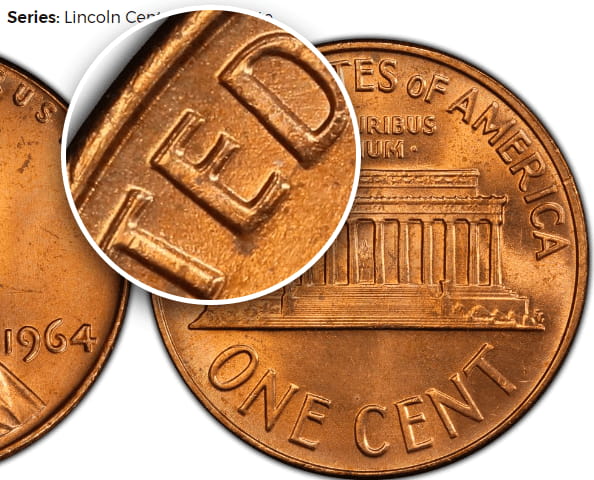
1964 Doubled Die Reverse — separation visible on UNITED STATES OF AMERICA lettering
The doubled die reverse error originated at the Philadelphia Mint when working dies misaligned during the hubbing process, causing the hub to impress the die multiple times in slightly different positions. Two primary varieties are cataloged: FS-801 shows more pronounced doubling than FS-802, with particularly strong separation on the Lincoln Memorial columns and E PLURIBUS UNUM.
How to identify: Examine reverse inscriptions under 10x magnification • Look for clear doubling on UNITED STATES OF AMERICA • Check Lincoln Memorial columns for doubled vertical lines • Doubling appears as raised outlines, not flat shelf-like extensions • Compare to certified examples to confirm variety
Value: FS-801: $150–$550 • FS-802: $100–$300 (MS64 RD record: $550)
A Lincoln cent design struck on a silver dime blank — dramatically smaller and lighter
1964 Wrong Planchet — Lincoln cent design on dime-sized blank, borders faded
This transitional off-metal error occurred when a planchet intended for silver dime production was accidentally fed into the penny striking press. The dime planchet measures approximately 17.9mm in diameter versus the penny's 19mm, causing the Lincoln cent design to fade or disappear at the borders. The coin weighs approximately 2.5g instead of the normal 3.11g.
How to identify: Measure diameter — noticeably smaller than normal • Weigh precisely: ~2.5g vs 3.11g • Design incomplete at borders where planchet is too small • Edge shows characteristics of dime planchet • Professional authentication essential due to rarity and value
Value: $1,000–$1,500 (Heritage 2017: $1,351.25)
Three overlapping Lincoln portraits on a single coin — a dramatic multi-strike anomaly
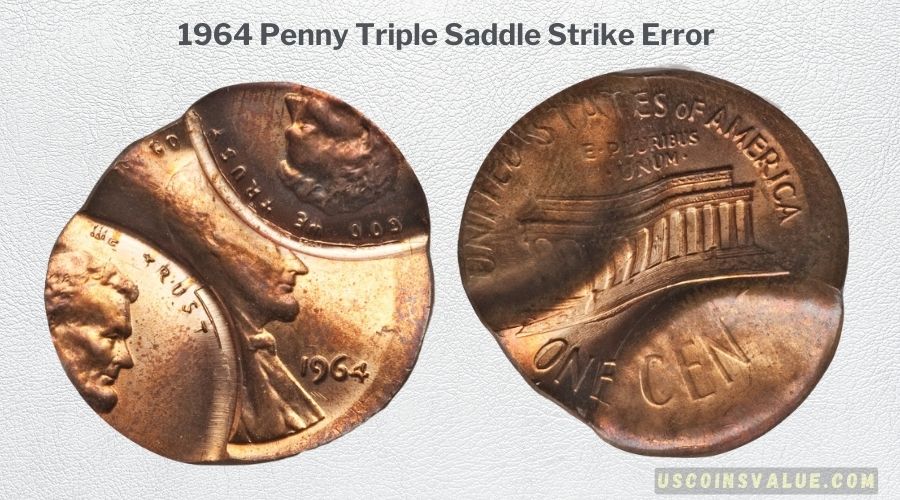
1964 Triple Strike — three distinct Lincoln profiles overlapping on obverse
The triple strike error occurred when a planchet received three separate impressions from the dies. The coin failed to eject from the striking chamber after the initial strike and remained for two additional impacts. Each subsequent strike shifted slightly, creating overlapping images with three distinct Lincoln portraits visible on the obverse. The known MS64 Red-Brown specimen sold for $1,440 at Heritage Auctions in 2020.
How to identify: Count distinct Lincoln profiles on obverse • Each strike shows clear separation • Look for three sets of date numbers where strikes overlap • Reverse also shows evidence of multiple strikes • Genuine multiple strikes show consistent offset angles
Value: $1,200–$2,000 (Heritage 2020: $1,440 MS64 RB)
The most valuable 1964 penny error — ghost images of a 1963-D cent beneath the 1964 design
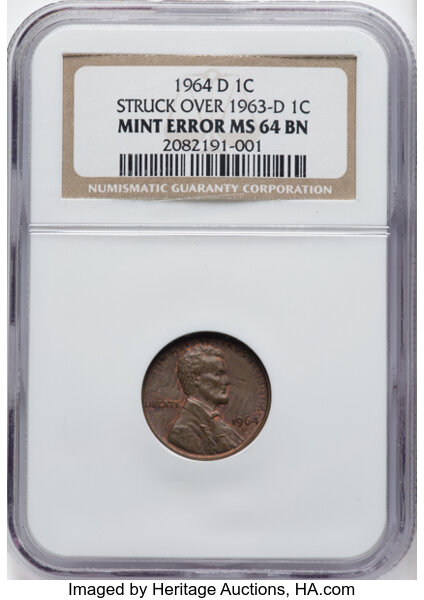
1964-D Overstrike — ghosted elements of the 1963-D strike visible beneath 1964 design
This extraordinary error involves a 1964-D penny struck over an existing 1963-D Lincoln cent. The earlier 1963-D strike remains partially visible underneath the 1964-D impression, creating ghosting effects and unusual doubling. The obverse shows the Lincoln Memorial reverse from the 1963-D coin appearing as a ghost image behind Lincoln's portrait. The MS64 Brown example sold for $4,312.50 at Heritage Auctions in 2009.
How to identify: Look for ghosting of Lincoln Memorial behind Lincoln's portrait on obverse • Check for remnants of 1963 date underneath 1964 date • Both D mint marks should be visible under examination • Reverse shows deformities from overlapping strikes • Professional authentication critical due to extreme rarity
Value: $3,500–$5,000 (Heritage 2009: $4,312.50 MS64 BN)
Missing edge portions from the blanking process — curved or straight clips
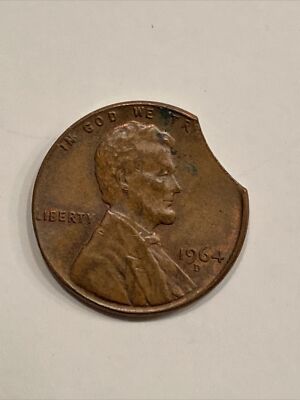
1964 Clipped Planchet — curved clip showing metal flow at missing edge
Clipped planchet errors occur during the blank production stage when the blanking machine's punches fail to strike cleanly formed circles from the metal strip. The result is a coin with a portion of its edge missing, creating either a curved crescent-shaped bite or a straight-edge clip. The size of the clip determines both the error's visual impact and its collector value.
How to identify: Examine the clipped edge for metal flow into the missing area • Genuine clips show blunt, rounded edges rather than sharp cuts • Curved clips indicate overlap with a previously punched hole • Straight clips from punch overlap at strip edges • Beware counterfeits — filed or cut coins have sharp edges
Value: Small clip: $10–$25 • Medium clip: $25–$50 • Large clip (30%+): $50–$100

Verified public auction records — establishes real market benchmarks
| Coin | Grade | Sale Price | Auction House | Date |
|---|---|---|---|---|
| 1964-D over 1963-D Overstrike | MS64 BN | $4,312.50 | Heritage Auctions | 2009 |
| 1964 Triple Strike Error | MS64 RB | $1,440 | Heritage Auctions | 2020 |
| 1964 Wrong Planchet (Dime) | MS (certified) | $1,351.25 | Heritage Auctions | 2017 |
| 1964 DDR FS-801 | MS64 RD | $550 | Heritage Auctions | 2013 |
| 1964-P MS-67 RD | PCGS MS-67 RD | $200+ | Various | 2023 |
| 1964 Clipped Planchet (Large) | MS (certified) | $75–$100 | GreatCollections | 2024 |
“The 1964 penny is proof that abundance and rarity can coexist — billions struck, yet a handful of errors that rival any year in the Lincoln cent series for dramatic collector appeal.”
Detect doubled dies, overstrike ghosting, and SMS surface finish in seconds
Snap Both Sides
CoinKnow instantly analyzes surface finish — flagging potential SMS specimens and distinguishing them from proofs and business strikes.
Detect Varieties
Automatic detection for doubled die reverse varieties, overstrike ghosting, and wrong planchet size discrepancies against reference specifications.
Get Instant Value
RD/RB/BN color grading, Sheldon Scale grade within 2 points, and real-time auction comparisons from Heritage and GreatCollections.
What most 1964 pennies are actually worth — and when to act
| Scenario | Realistic Value | Action |
|---|---|---|
| Satin surface finish, not proof, not business | $5,000–$25,000+ | PCGS/NGC authentication immediately |
| Ghost 1963 design beneath 1964-D strike | $3,500–$5,000 | Expert authentication; may be unique |
| Silver color, ~2.5g, 17.9mm | $1,000–$1,500 | Weigh precisely, then authenticate |
| Three overlapping Lincoln portraits | $1,200–$2,000 | Authenticate, grade with PCGS/NGC |
| DDR doubling visible on reverse lettering | $100–$550 | Attribute to FS-801 or FS-802, grade |
| MS-65–67 RD, any mint | $12–$200 | Consider grading if full red |
| Circulated copper, any condition | $0.01–$0.25 | Keep for type / date sets |
The 1964 penny's paradox is that its overwhelming abundance is precisely what makes its rare varieties so extraordinary. In a sea of billions of identical copper cents, a single overstrike, wrong planchet, or SMS specimen represents a remarkable convergence of circumstance and survival. For collectors drawn to the Lincoln cent series, 1964 offers the satisfying challenge of hunting meaningful error coins within one of the most common dates ever minted — and the knowledge that the next roll of 1964 pennies examined could conceal something genuinely exceptional.
“The 1964 Lincoln cent is simultaneously the most common coin in American pocket change and home to some of the most valuable mint errors of the twentieth century — a testament to the fact that rarity and mintage are entirely different things.”